

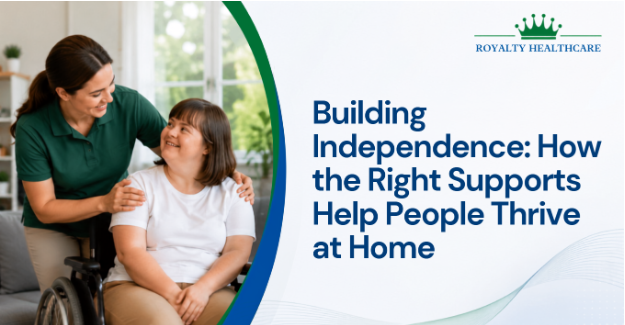
For NDIS participants, real progress isn’t measured only in support hours delivered. It’s measured in what those supports make possible: cooking a meal unaided, managing a health condition safely at home, catching a bus alone for the first time, or simply feeling more capable and confident day to day. The best supports don’t do everything for a person; they help that person do more for themselves. This guide explores how skill-building and clinical supports work together to help participants live fuller, more independent lives.
Why Independence Sits at the Heart of Good Support
The NDIS was built on a simple, powerful principle: that people living with disability should have choice, control, and the chance to pursue the life they want. Independence is central to that vision. Support that fosters genuine capability, rather than dependence, is what helps participants move towards their goals and live life on their own terms.
This matters because the difference between the two approaches is profound. Support that simply does tasks for a person meets an immediate need but leaves them no more capable than before. Support that helps a person build skills, by contrast, has a lasting effect, expanding what they can do and often reducing how much help they need over time. The goal is always to empower rather than to foster reliance.
For participants across South-East Queensland, quality NDIS life skills supports in Brisbane focus firmly on this kind of capability-building. Whether the goal is managing daily tasks, living more independently, or gaining confidence in the community, the emphasis is on helping a person grow. Understanding how this works, and how it connects with the clinical supports some participants also need, is key to building a genuinely good support arrangement.
What Life Skills Support Actually Involves
Because everyone’s goals and starting points differ, skill-building support is highly individual. Understanding the areas it commonly covers helps you picture how it might help you or someone you support. Here are the main forms it takes and why each matters:
- Daily living skills. Cooking, cleaning, laundry, and managing a household are fundamental to independent living. Support helps participants build these skills gradually and safely, expanding what they can manage on their own rather than doing it for them.
- Personal care and routines. Developing the ability to manage personal care and establish healthy daily routines builds both capability and confidence. Support here respects dignity while helping a person become more self-sufficient over time.
- Money and budgeting skills. Managing money is essential to independence, yet often overlooked. Support with budgeting, paying bills, and handling finances helps participants take genuine control of an important part of adult life.
- Communication and social skills. Building confidence in communicating and interacting helps participants form relationships, express their needs, and engage with the world. These skills underpin connection and self-advocacy alike.
- Travel and transport skills. Learning to get around independently, whether using public transport or navigating the local area, opens up work, study, social life, and community. It’s often a stepping stone to much greater independence.
- Problem-solving and decision-making. Developing the ability to make decisions and solve everyday problems is central to genuine autonomy. Support that builds these skills helps participants navigate life with growing confidence.
Each of these is built around the participant’s own goals and pace rather than a fixed programme. A good provider takes the time to understand what a person wants to achieve and supports them towards it, stepping back as capability grows. This person-centred, patient approach is what turns support into genuine, lasting progress.
Why Skill-Building Support Makes Such a Difference
Beyond the specific skills involved, it’s worth understanding why this approach matters so much for participants’ lives. Recognising these benefits shows why capability-building deserves to be at the centre of good support. Here’s what skill-building support achieves and why each outcome matters:
- Greater independence. As participants build skills, they can do more for themselves and rely less on others. This expanded independence is often deeply meaningful, giving people more control over their own lives.
- Increased confidence. Mastering new skills builds self-belief. A participant who learns to cook a meal or travel alone gains not just a practical ability but a sense of their own capability that carries into other areas.
- Better quality of life. Independence and confidence translate directly into a richer life, with more choices, more participation, and more of the everyday satisfactions many people take for granted.
- Progress towards personal goals. Skill-building is how many participants move towards bigger goals, whether that’s living more independently, gaining employment, or studying. Each skill developed is a step towards the life they want.
- Reduced reliance over time. As capability grows, some participants need less intensive support, which is a positive outcome for everyone. Good support aims to work itself towards this rather than perpetuating dependence.
- A sense of dignity and self-worth. Perhaps most importantly, being supported to do things for oneself, rather than having everything done for you, affirms a person’s dignity and worth. This human dimension is at the heart of why the approach matters.
Understanding these benefits shows why capability-building support is so valuable. It’s not simply about completing tasks; it’s about helping a person grow, thrive, and live with greater independence and dignity. This same philosophy of supporting people to live well at home extends to the clinical care some participants also require.
When Clinical Support Is Part of the Picture
For some participants, living well and independently at home also involves health and clinical needs. This is where nursing support becomes important, allowing people with medical requirements to remain safely in their own homes rather than in clinical settings. It’s a vital complement to skill-building for those who need both.
Nurse-led support at home can cover a range of needs, from medication management and health monitoring to more specialised clinical care, all delivered by appropriately qualified professionals. Crucially, it’s provided in consultation with a participant’s treating health team, ensuring the care delivered at home matches their clinical needs precisely and safely.
Quality NDIS nursing services in Brisbane allow participants with health needs to enjoy the same independence and comfort of home that skill-building support fosters. Rather than health requirements forcing a person into a clinical environment, skilled nursing brings the necessary care to them. For participants who need both clinical support and help building daily living skills, having these delivered by one coordinated team makes life considerably simpler and care more consistent.
Royalty Healthcare is a registered NDIS provider based in Strathpine, delivering life skills support, community nursing, and a full range of NDIS services across Brisbane and South-East Queensland through one coordinated team. You can learn more about their services at royaltyhealthcare.com.au.
What to Look for in a Provider
Choosing the right provider makes a real difference to how much a participant gains, and not all providers bring the same approach. Knowing what to look for helps you choose with confidence. Look first for genuine registration with the NDIS Quality and Safeguards Commission, which means the provider is independently audited against the NDIS Practice Standards and held accountable for safety and quality.
A person-centred, capability-building philosophy is equally important. The best providers focus on helping participants grow and do more for themselves rather than simply completing tasks. Ask how they build skills, measure progress, and involve participants in setting their own goals. For clinical needs, ensure the provider has qualified nurses and coordinates properly with treating health teams.
Consistency of support workers matters too. Building skills and trust is far easier with familiar faces than a rotating roster, so a provider who prioritises life skill development in Brisbane and continuity of staff will help participants progress more effectively. Properly screened and trained workers, holding current NDIS Worker Screening Checks, are essential throughout.
Getting Started
Beginning the search can feel daunting, but it needn’t be faced alone. Reputable providers offer a no-obligation conversation to understand the participant’s goals, answer questions, and talk through how they can help. That first discussion is a chance to gauge whether a provider truly listens and whether their approach feels right for the person involved.
Good support always begins with understanding the individual, their goals, their strengths, their needs, and where they’d like to grow. From there, a quality provider develops a tailored plan, introduces the team who will be involved, and helps the participant start building skills and living more independently at a comfortable pace. Taking that first step, simply reaching out for a friendly chat, is often the moment new possibilities begin to open up.
Conclusion
The best NDIS support does more than meet immediate needs; it helps people build capability, confidence, and independence, and where needed, it brings skilled clinical care into the comfort of home. Understanding how skill-building support works, recognising the profound difference it makes, and appreciating how nursing support complements it all give you the confidence to build a genuinely good support arrangement. With the right provider alongside them, participants can grow, thrive, and live fuller, more independent lives on their own terms. If you or someone you love could benefit from this kind of support, reaching out to a registered, person-centred provider for a friendly, no-obligation conversation is a wonderful place to begin.